The Whole Industry Exhaled at Cannes. That’s the Warning.
A year ago I wrote that a freight train was coming for our industry. This year it pulled into the first station, and everyone on the platform relaxed. That calm is the part that should worry us.

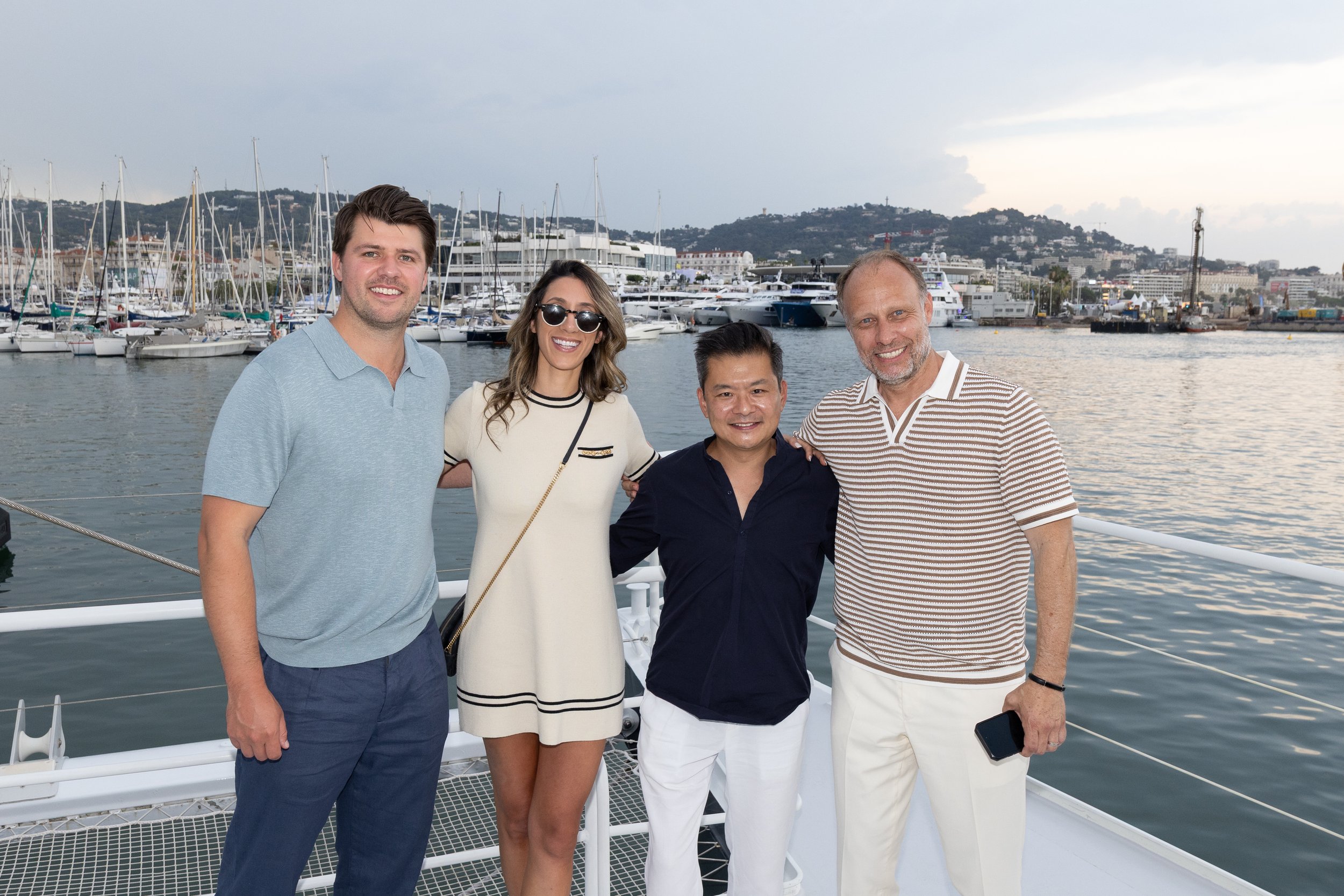
I came back from Cannes this year calmer than I expected to be, and that is exactly what worries me. A year ago I wrote that a freight train was coming for our industry. This year it arrived. It pulled into the first station with the steam still hanging over the platform, and everyone got their first real look at it. The unsettling part was how calm the platform stayed.
The festival was hotter than last year in every sense. Hotter literally, with afternoons that pushed people off the promenade. And hotter in intensity, with more brands, more activations, and more money moving more freely than I have seen in a while. But the conversation about AI, the thing I expected to take over every room, was calmer than I had braced for. Not absent. Calmer. People have lived with the technology for a full cycle now, they have made it a daily companion, and the feeling I picked up, in panels and in quieter talks over coffee or rosé, was a kind of quiet confidence. A sense that people are still in control. That our judgment and our taste still beat the machine. That you can usually still tell when a deck or a film was made by a person and not a model.
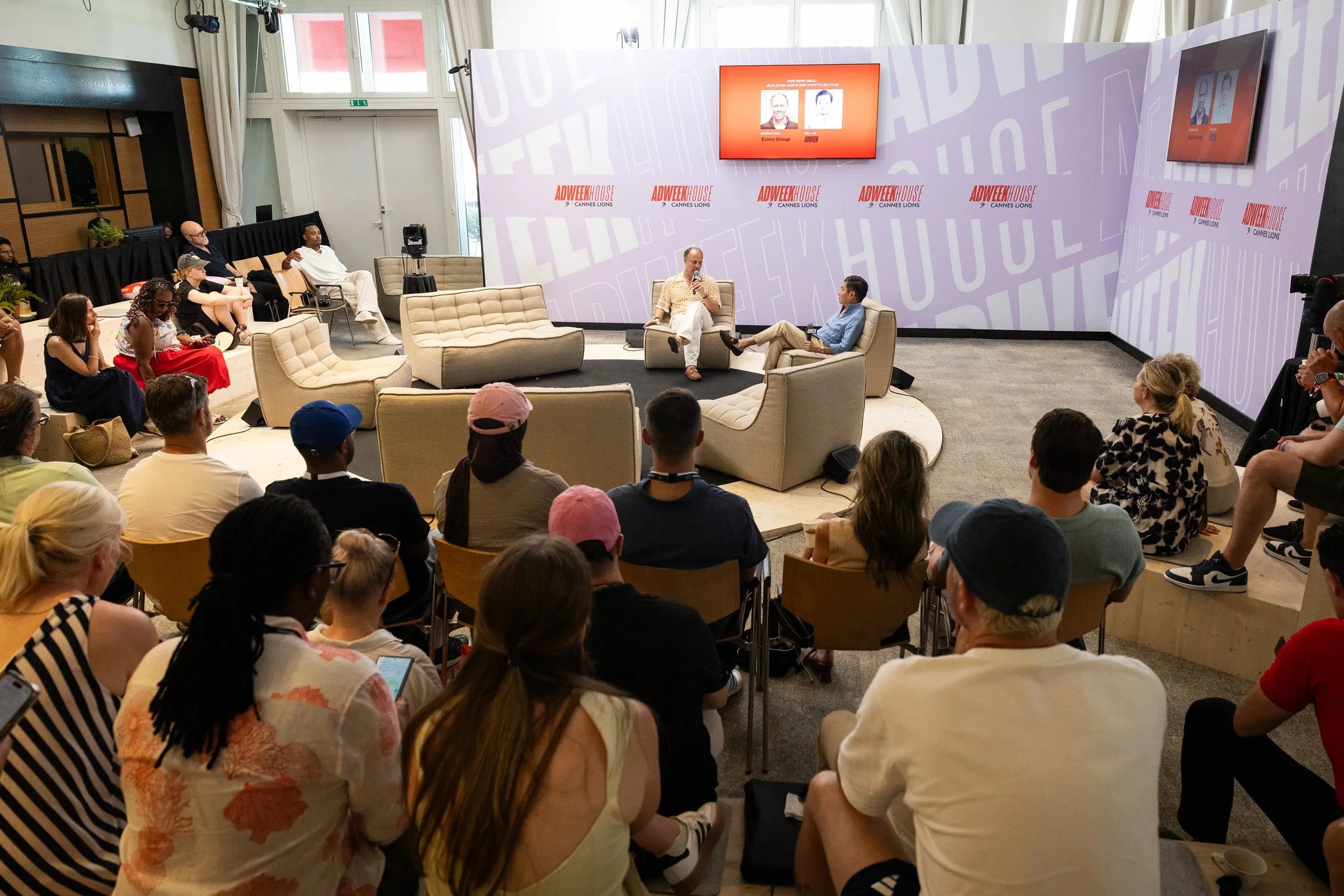
Everyone agreed on what AI does well. It processes data faster and wider than any of us could. But on accuracy, and on real thinking, the machine still gets caught. More than one operator told me, in so many words, that they feel several steps ahead of where the conversation on stage actually is. The festival’s unofficial message landed somewhere close to “calm your fears, the revolution is survivable.” Amazon framed AI as a tennis racket, the thing that makes a good player better. People liked that framing. It let everyone feel good.
And here is the part I keep coming back to. The most AI saturated Cannes on record was also the one that had just cracked down hardest on AI deception. You will remember the fallout. An agency had a Grand Prix and eleven other awards revoked after auditors found a case film that used AI to fake a news segment and simulate results that never happened. The festival answered with new integrity standards for 2026, dual human and AI fact checking and a rule that the agency CEO and a senior client both personally sign off on every entry. Entries fell by about a quarter. So the same festival that had just built a verification regime around synthetic media was also hosting its largest ever celebration of AI creative tools. That contradiction is not a footnote. It is the emotional texture of the whole week. The technology that can fabricate a CNN segment is the same technology being toasted on the beach, everyone could feel it, and so the polite move was to talk around it.
Sitting on the platform with the train finally stopped in front of you, the next move feels obvious. You can see the doors. You step on, you find a seat, you go for the ride. The train is not moving yet, so everything feels calm and within your control. But none of us has actually taken this trip. The route ahead is unknown, the steepest climbs and the fastest stretches are still somewhere down the line, and the stillness on the platform is exactly what makes that journey easy to underestimate.
Because underneath the calm, the ground was moving, and for the first time I could feel it clearly. The geeks arrived in force. More AI and technology startups working the hotels and the avenue than I have ever seen here, the foundational model companies wider and louder, OpenAI executives in marquee keynotes, more CTOs than I can remember on the Croisette, and a hackathon for good measure. But the real signal was not on the main stage at all. It was in the infrastructure. Nvidia spent the week positioning itself as the chip layer running underneath the entire adtech stack. Palantir surfaced as the foundation a major marketing data cloud is now being rebuilt on top of. And platform after platform quietly opened itself so that outside AI agents could plug in and transact directly, agent to agent. This is not something arriving in a few years. This is the plumbing of our industry being rewired in plain sight, right now.
And that is the disconnect that should worry us. The machine room was loud. The ballroom was calm. The people rewiring how ads get bought and sold were busy at the infrastructure layer, while much of the creative and account class was still telling itself, over rosé, that it sits several steps ahead. Notice what the agent to agent moves actually threaten. If a brand’s own agent can transact directly with a publisher’s agent, the long and opaque chain of intermediaries our industry has lived on, the DSPs and SSPs I flagged last year, has a real problem. That conversation is not arriving over the next few years. It started this year, and most of the room was not in it.
So the progress is real. The pace is wrong. I do not think our industry has absorbed how completely AI is going to rewrite the business models underneath it, the actual logic of how these companies make money, and not merely the workflows that sit on top. The clearest evidence is that the holding companies, the public voice of our sector, have already changed their story. Publicis agreed to pay 2.2 billion dollars for LiveRamp on top of its earlier Epsilon investment, and now builds its pitch around helping brands create proprietary datasets and train AI on top of them. Omnicom closed its thirteen and a half billion dollar merger with IPG to become the largest group in the world, and recast itself from a creative first holding company into a commerce and technology business. WPP is taking apart the holding company structure it spent forty years building, put a former Microsoft executive in the CEO chair, and is renting Google’s AI infrastructure for a reported four hundred million dollars because building it alone is no longer realistic. Look at that list. Every one of those companies has stopped calling itself an advertising company and started calling itself a technology and data company. They are telling you something.

The speed is brutal, and I have sympathy for it, because every one of us still has a day job to deliver while the ground moves. I have been close to the underlying science as an investor since 2016, and even from that seat the pace is hard to keep up with. What I did not see enough of at Cannes was groups truly opening themselves up. Making the real investments. Bringing in genuinely new skills. Willing to break their own culture at the speed this moment asks for.
And here is what gives me conviction rather than fear. Cannes made the case better than I could. In the most AI saturated year on record, one of the most awarded pieces of craft was Apple TV’s deliberately handcrafted, analog rebrand. Kantar’s Jeff Greenspoon framed that tension as the whole story of the week. A Dove campaign built on real, unflattering Reddit reviews won wide praise for the same reason. The market is already rewarding what only a human would dare to do. That is the thing to hold onto. The machine lifts the baseline for everyone, and human judgment, taste, and nerve are what will separate the firms that win. Which is why this is a moment to move.
If you are running one of these companies, treat this as the strategy itself, not a workstream and not an innovation team off to the side. Three things matter more than the rest.
Put technology leadership at the top
We are a creative industry, built on talent that was never trained for this, and the culture has to change all the way through. Put technology leadership at the very top of the house. WPP putting a Microsoft operator in the CEO chair is the signal, and the open question is who follows. The leader you need can operate at enterprise scale and is also nimble and technical enough to absorb the latest advances at speed. The shift runs from a creative environment to a creative technology environment, from media to media technology, from account services to account technology, not just at the comfortable edges.
Turn how you work into data you own
This is the one I would not let any CEO leave the room without. Every year you have operated successfully is a record, your thinking, your processes, the methods that worked and the ones that did not, and at a basic level the models do not have your history. So capture it. Your methodology, your judgment, your wins and your losses, organized, protected, and treated as proprietary data. That is your differentiator from here. It is exactly why Publicis is building its whole narrative around proprietary data, and the lesson is not to admire their balance sheet, it is to do the same at your scale before someone does it to you. The moat is not the model, which is becoming a commodity faster than most people want to admit. The moat is your data and your process.
Act like a venture investor
The most interesting marketing and adtech platforms are arriving in our sector from outside it, and the firms moving fastest are not our traditional peers. Accenture, a consultancy, just acquired Whalar in what the seller called the largest creator economy deal to date. CAA, a talent agency, stood up a two hundred and fifty million dollar holding company to buy and run creator businesses as if they were media assets. Capital is treating our category as something to roll up and operate. Your edge is that you already understand what is out there, and you can build custom integrations, AI layered on top, tuned to your own process rather than bolted on generically. That is something a buyer has to pay for. You can build it yourself, so scour the world for the best and the newest, decide what matters, and make the bets.
À l’année prochaine
So, yes. It was as busy as ever, the sun relentless on the thermometer and on all of us, and still fun with a glass of rosé in hand on the Croisette. But I came home seeing a clear split. There is a small group genuinely rebuilding its model, willing to make bets, moving with real intention and real investment. And there is a much larger group still standing on the platform. Generative AI is leveling the field, which means a focused, technically fluent independent can now compete with firms many times its size. That cuts both ways, and which way it cuts for you is a choice.
And do not forget that we are still in the relationship business. Clients are human, and the firms that win will pair that human edge with capabilities their clients cannot build alone, sometimes as concrete as standing up the data pipeline that finally gets a brand’s house in order. That is value they cannot get from a campaign, and value they will pay to keep.
I have hope, and I continue to believe in this industry, deeply. But my prediction for next year is that there will be more geeks on the avenue, with a higher level of technical skill, and some of them will start building their own extension to the festival, off to the side, on their own terms. The question worth asking before then is simple. When they do, will you be on the train, or standing on the platform watching it pull away.
À bientôt.